
Babydoll Sheep
Rich History, Bright Future
The History of Babydoll Sheep in Australia
Babydoll Sheep History Timeline
- Late 1700s (England)
John Ellman of Glynde improves the local Sussex sheep, creating the Southdown breed. - Early 1800s (England)
Jonas Webb and other breeders help spread the Southdown’s reputation across Britain. - 1805 (Australia)
Reverend Samuel Marsden records Southdowns in New South Wales, making them one of the first British sheep breeds in the colony. - 1800s–1900s
Southdowns used widely in Australia for prime lamb production and to improve local flocks. - 1921 (Australia)
Hillgrove Stud is founded: later becomes one of the main sources of heritage Babydoll genetics in Australia. - Mid-1900s
Market demand for heavier lambs leads breeders to develop a larger, modern Southdown. - 1974
New Zealand and English Southdown imports arrive after border restrictions ease, further increasing size and muscling in the breed. - Around 1986
In America, the heritage, compact Southdown type begins to be called “The Olde English Babydoll Southdown.” - Early 2017
ASSBA registered Southdown breeders in the Flock Registry were contacted to gauge interest in the formation of an Association to protect and preserve the small Babydoll type Southdown - 2017
The Babydoll Sheep Association of Australia Inc (BSAA) forms, supporting breeders and protecting the heritage type. - 2020
The Australian Stud Sheep Breeders Association (ASSBA) creates a Babydoll section in its Flock Registry, giving the Babydoll sheep formal recognition. - 2021
The first Babydoll sheep are formally registered in the ASSBA Flock Registry.
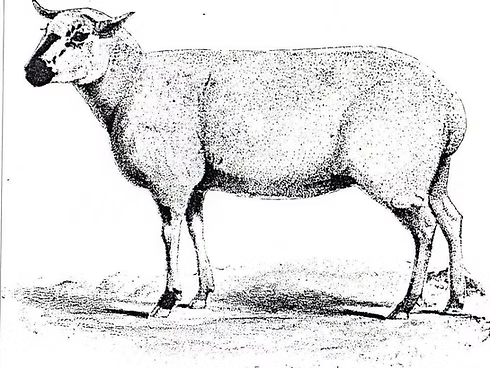
From the South Downs of England
The Babydoll’s story starts in the chalky hills of Sussex, England, an area known as the South Downs. For hundreds of years, farmers there kept small, hardy sheep who thrived on the thin pastures and produced meat that was prized in local markets.
In the late 1700s, a farmer named John Ellman of Glynde began carefully selecting the best of these sheep. Ellman wanted animals that were early-maturing, compact, and good at producing both meat and wool. His work created what we now recognise as the Southdown sheep.
By the early 1800s, the Southdown was famous across Great Britain. It became the foundation of many other “Down” breeds (such as the Dorset Down, Oxford Down and Hampshire Down). One of Ellman’s successors, Jonas Webb, also helped spread the Southdown’s reputation by selling sheep far and wide.
The Southdown’s friendly nature, small size, and excellent meat quality made it popular not only in England but also in Europe, North America, and eventually Australia
The Southdown Sheep’s Arrival in Australia
Sheep came to Australia with the very first settlers, and the Southdown was one of the earliest recognised breeds to arrive.
By 1805, Reverend Samuel Marsden, a key figure in Australia’s early sheep industry, was writing about Southdowns in New South Wales. He used them for crossing purposes on the Asiatic breeds brought from India during the first few years of the settlement in Australia. This makes them one of the first British sheep breeds to become established in the colony. In Tasmania the Cressy Company founded the breed in 1825. These sheep originated from the renowned and well-established flock of John Ellman.
When the first Flock Book for the British Breeds of Sheep was issued by the Royal Agricultural Society of Victoria in 1898, it included the Southdown sheep and this was the first authentic and permanent record of the Southdown breed.
Southdowns quickly gained a reputation in Australia for producing high-quality lambs. Throughout the 1800s and 1900s, they were used both as a pure breed and as an improver in cross breeding programs. Their genetics were especially valued in the development of Australia’s prime lamb industry.
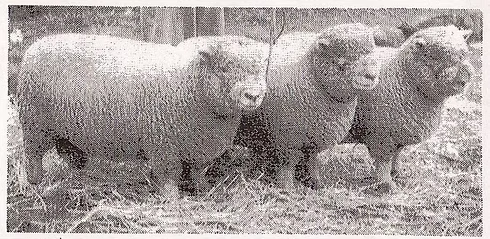
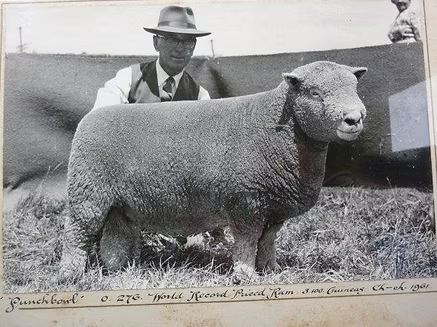
From Traditional Southdowns to the “Modern” Southdown
For a hundred years, from 1780 to 1880, the Australian sheep industry was regarded solely in terms of wool. As time went on, the population increased, refrigeration was invented and the sheep meat industry began to emerge. By the mid-20th century, buyers wanted bigger lambs with heavier carcasses. To meet this need, breeders began selecting Southdowns that were taller, longer and heavier than the original compact type.
A major turning point came in 1974, when restrictions on live sheep imports were lifted. New genetics arrived from New Zealand and England, where Southdowns had already been bred to be larger. These imports reshaped the Australian Southdown into what is now called the modern Southdown; a sheep very different in size and appearance from the original Sussex type.
The modern Southdown remains popular as a terminal sire breed in commercial lamb production, but its look and build are a world apart from the small, teddy-bear sheep of Ellman’s day.
The Babydoll
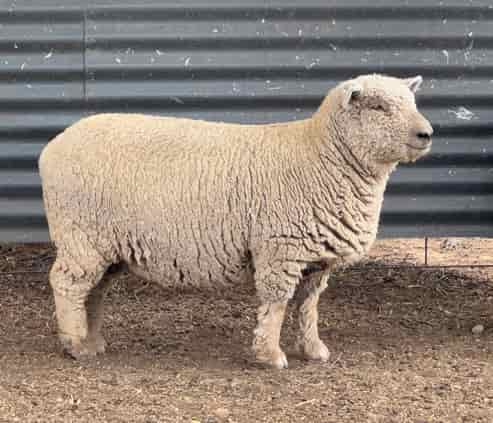
While many breeders followed the trend toward bigger sheep, a few studs held onto the older, smaller type of Southdown. These sheep kept the traditional features:
- Short, stocky bodies;
- Short legs;
- Woolly faces that look like “teddy bears;”
- Gentle, friendly temperaments.
In the United States, breeders began calling these heritage Southdowns the “Olde English Babydoll Southdown Sheep” and the name ‘Babydoll”, quickly caught on internationally because of their cute, teddy bear like appearance.
Here in Australia, breeders also began using the name “Babydoll” to distinguish the heritage type from the larger, modern Southdown. These sheep are now known internationally as the Babydoll.
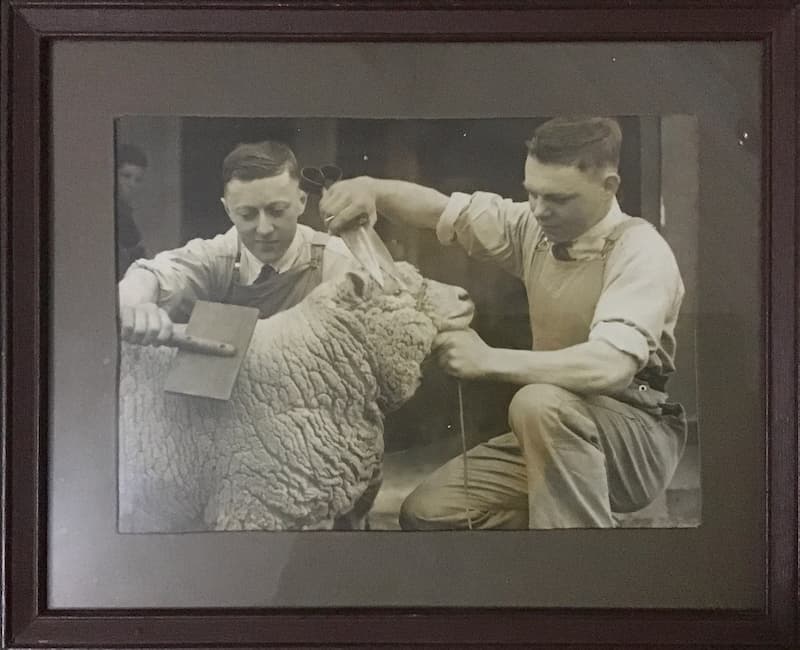
“Dick and Bill Metcalf, who together with their father James, were the first owners of the Hillgrove Southdown Stud”
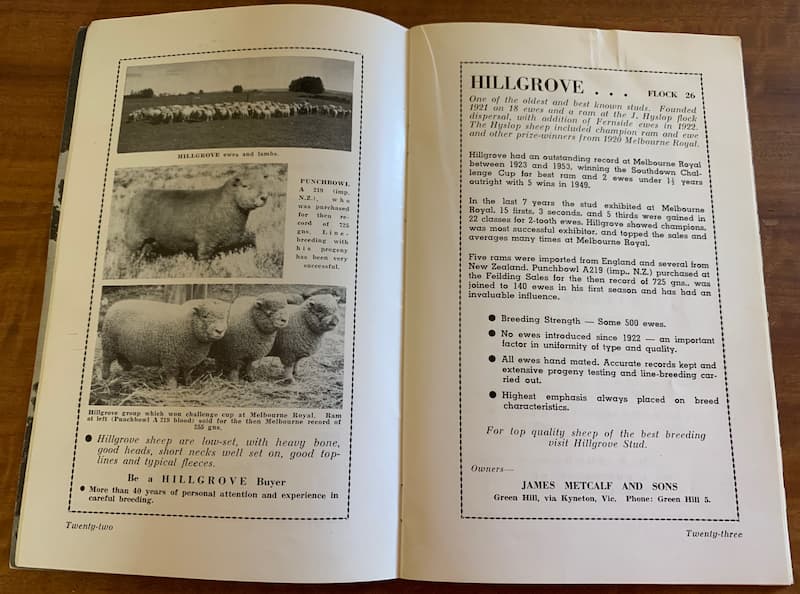
“Advertisement for Southdown sheep from the Hillgrove Babydoll Stud.”
The Hillgrove Babydoll Stud
A key reason Babydolls survived in Australia is the Hillgrove Stud, established in 1921. Hillgrove is one of the country’s oldest Southdown studs, and for more than a century it has maintained the smaller, traditional bloodlines. Many of today’s Babydolls in Australia can trace their lineage back to Hillgrove sheep. The stud has remained active for well over 100 years, continuing to breed and sell Babydoll sheep true to the original heritage type. Without Hillgrove, the Babydoll may not have survived in Australia.
Why Babydolls Matter Today
The Babydoll is more than just a charming face. These sheep represent:
- A direct link to one of England’s oldest and most influential sheep breeds
- A part of Australia’s farming history, present here since at least the early 1800s
- A practical, versatile sheep for small farms, vineyards and lifestyle properties
- A gentle, friendly breed that appeals to both commercial and hobby farmers
Thanks to dedicated breeders, the Babydoll continues to thrive in Australia; not only as a living piece of history, but as a sheep perfectly suited to modern small-scale farming.