
Babydolls at Home
Why Keep Babydoll Sheep?
Babydoll sheep are a charming, versatile breed that are popular with small-acreage farmers, hobbyists, and families.
Loved for their compact size, gentle temperament, and teddy-bear looks, they are a delight to keep at home.
Good handling facilities and safe practices are still essential due to Babydoll’s weight and strength.
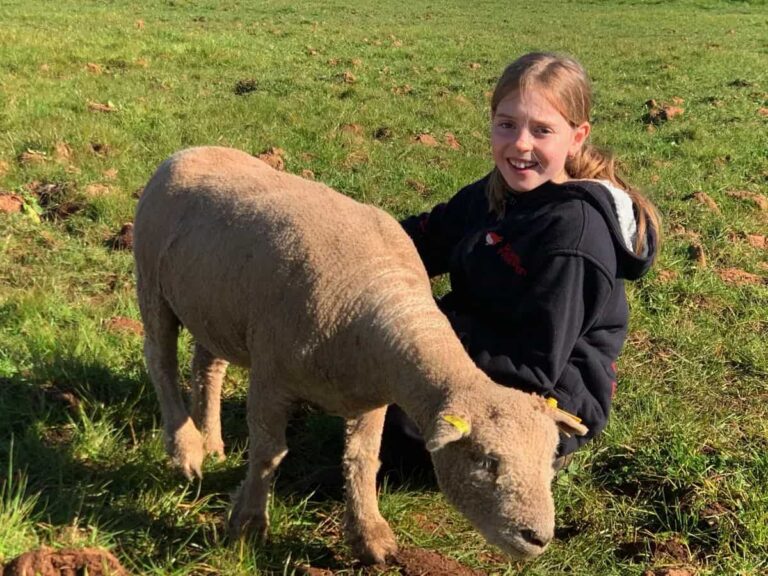
Manageable Size:
Standing between 47 to 61cm at the shoulder, Babydolls are easier to handle than larger sheep but still strong; rams can weigh 80kg+ and ewes 60kg+. Their size means they:
- Are less intimidating for children and beginners;
- Pose less risk of injury when being handled;
- Can thrive in smaller paddocks;
- Suit owners with smaller areas of land.
Gentle & Endearing:
With woolly faces and a perpetual “smile,” Babydolls earn their nickname “teddy bear or smiling sheep.” They’re docile, curious, and can form affectionate bonds, making them ideal pets or companions.
Natural Lawn Care:
Excellent grazers, Babydolls keep pastures tidy and healthy. In vineyards and orchards, they control grass and weeds without damaging bark or fruit. Careful monitoring and well-researched practicalities though are essential if they are placed in vineyards and/or orchards.
Breeding & Hobby Farming:
Breeding Babydolls can be rewarding and educational. They often produce twins or triplets, so flocks grow quickly. Quality breeding is vital to maintain the breed’s standards and heritage.
Educational & Therapeutic:
Babydolls are popular in petting zoos, school farms, and animal-assisted therapy due to their calm nature and smaller size.
Heritage Preservation
As an ancient breed, Babydolls play an important role in conserving genetic diversity and preserving historic sheep lines.
Are Babydoll Sheep Miniature Sheep?
Babydoll sheep are often called “miniature” sheep but this isn’t accurate. They are naturally small sheep that have always been compact, not bred down from larger sheep.
Originating from Southdown sheep in England in the late 1700s, Babydolls were brought to Australia in the early 1800s for their suitability to small-scale farming. The Australian Stud Sheep Breeders Association (ASSBA) Breed Standard for Babydolls is that they stand no taller than 61 cm at the shoulder, much smaller than many other breeds, but still sturdy, with rams weighing around 88 kg or more and ewes around 62 kg.
Calling them miniature suggests they’ve been selectively bred for size, as in miniature horses or goats, which can lead to health or temperament issues. In reality, Babydolls are well-proportioned, hardy, and gentle because they’ve remained true to their natural form. In fact, today’s Southdowns were bred up in size from Babydolls to meet commercial meat and wool demands, not the other way around.
Babydoll sheep are a living link to traditional farming and should be valued for their authentic heritage, not mistaken for novelty miniature livestock.
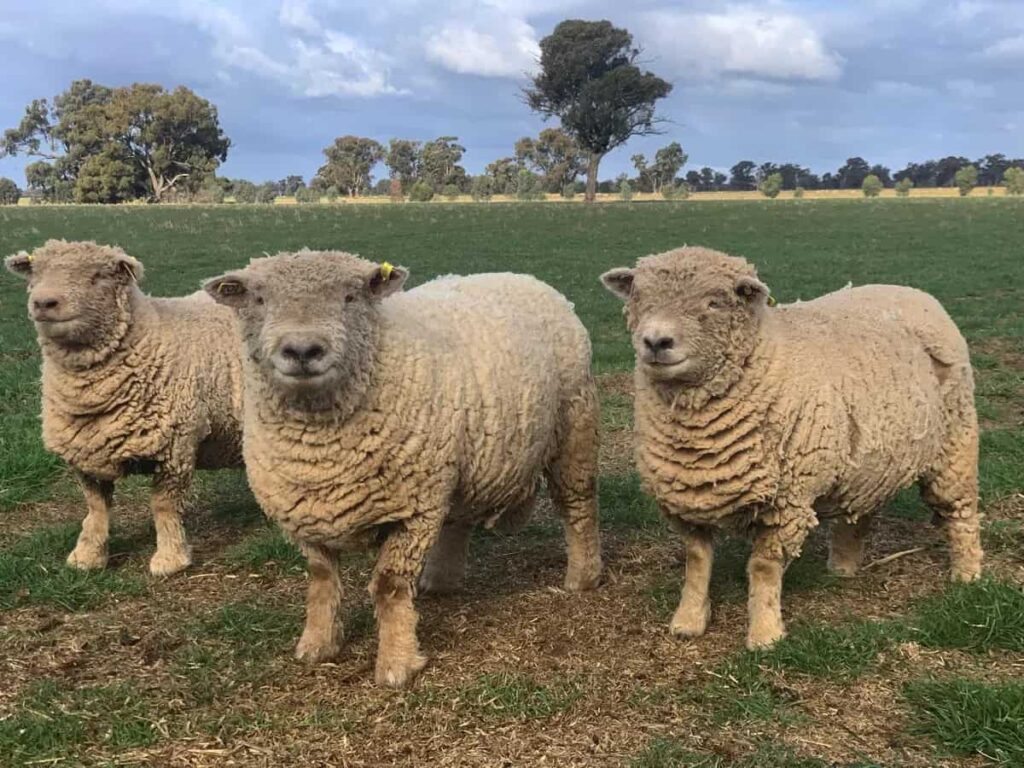
What are the Characteristics of Babydoll Sheep’s Wool?
Babydoll sheep’s wool typically ranges from 19 to 22 microns in fibre diameter. The wool has a springy, elastic crimp and can be used for knitting and weaving projects. Babydoll sheep’s wool is not as delicate as Merino wool which is 17 to 21 microns but is often denser and springier which gives it body and resilience. Romney sheep’s wool is courser, being 29 to 39 microns and is strong and has a lustrous sheen but Babydoll wool is much softer and better suited for next-to-skin wear. Corriedale sheep’s wool is 25 to 30 microns which means it is stronger than Babydoll wool but not as soft.
Babydoll sheep’s wool is a medium-length fleece with staple lengths averaging 5 to 10cm. This is relatively short, especially when compared to breeds like the Romney or Lincoln which can grow wool to 15 to 30cm and fine Merino staple lengths are around 6 to 12cm or more.
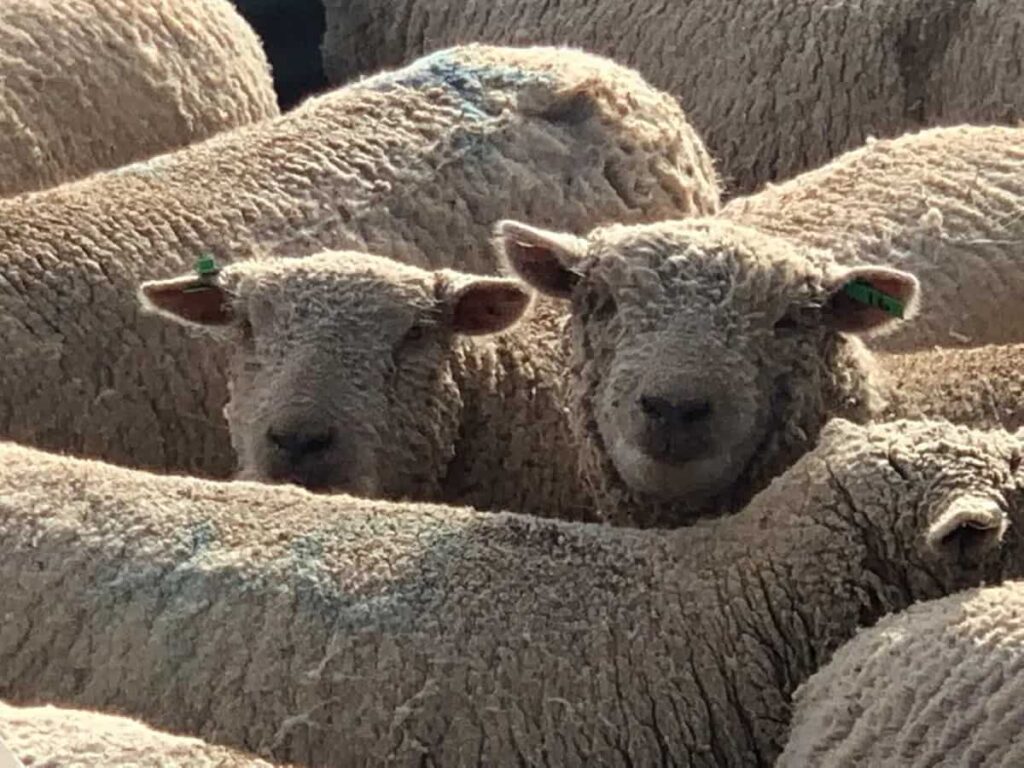
What are Some of the Husbandry Needs of Babydoll Sheep?
Caring for Babydoll sheep is rewarding, but like all sheep, they have specific needs to keep them healthy, happy and thriving.
Shelter & Weather Protection
Babydolls benefit from a dry, draft-free shelter to escape rain, wind, and summer heat. A simple three-sided structure or shed is usually enough, as long as it offers shade and protection from extreme weather. They definitely need trees for shade in the Australia summer and if these can’t be provided, then a shed or other structure that creates shade is necessary.
Fencing & Security
Strong, secure fencing is important, at least 90 cm high, to keep sheep in and predators out. Babydolls are usually gentle on fences and are content to stay in their paddocks but it’s better to be safe than sorry.
Grazing Space & Pasture Management
Babydolls, like all sheep, thrive on quality pasture. Rotational grazing helps prevent overgrazing and reduces parasite problems. Their compact size means they need less land than larger breeds, but paddocks still need rest and recovery time.
Feeding & Nutrition
Sheep should be provided with a primary diet of good pasture along with quality hay and/or sheep pellets to ensure they receive the nutrition they need. It is also important to offer a sheep-safe mineral supplement but avoid copper as it is toxic to all sheep. Fresh, clean water must be available at all times and placed in an accessible location. Water troughs should be at a suitable height, as smaller Babydolls and lambs may struggle to reach the water if they’re too high.
Health Care
Babydoll sheep require regular care and attention to maintain their health and wellbeing. Their hooves should be trimmed every six to eight weeks to prevent lameness. Parasite control is essential, which includes carrying out regular worm checks and drenching if necessary. Vaccinations should also be maintained according to an appropriate schedule to protect against disease. Sheep must be checked regularly for fly strike, as it can be fatal if not treated promptly, and tick control is also important, with measures such as tick collars often being used since tick bites can also be deadly. It is also important for owners to educate themselves about serious diseases such as Brucellosis and Johne’s Disease, as well as genetic disorders such as Gaucher Disease, and to take appropriate preventative action.
Shearing & Wool Care
Babydolls need shearing at least once a year to maintain wool quality. In some parts of Australia extra crutching (wool removal around the tail) is needed to prevent flystrike. Wigging (the removal of wool around the face) may also be necessary to prevent foxtail type grass-seeds from getting in their eyes.
Daily Monitoring
Babydoll sheep are prone to becoming cast, meaning they can get stuck on their backs, so they must be checked daily and rolled onto their stomachs if found in this position so they can get up. If they are not found in time, they can die.
Companionship & Social Needs
Babydolls are flock animals and should never be kept alone. At least two Babydolls are needed for their mental well-being and to reduce stress; three or four is better. No reputable breeder will sell just one Babydoll sheep.
Breeding Considerations
If breeding, use only healthy, well-structured Babydoll sheep who meet the Babydoll Breed Standard. Ewes should be mature before lambing, and lambing areas should be clean, safe, and sheltered. For best practice, Babydolls are not bred until their second year.